Marc Köhlbrugge had my favorite take on last week’s critical PHP vulnerabilities:
“If this PHP vulnerability allows remote code execution, doesn’t that mean we can use the vulnerability to auto-patch all vulnerable servers?”
If we didn’t laugh, we’d cry.
While everyone worries that AI vibe coding will flood the internet with insecure code, LLMs are finding insecure code that we made years ago.
The PHP2Shell vulnerabilities reach back to PHP 5.4 and could let unauthenticated attackers take control of your server. The vulnerabilities were old. What’s new is how quickly they can be discovered and turned into working attacks.
We’ve been through situations like this before: Heartbleed in 2014, Log4Shell in 2021 and Zenbleed in 2023.
Mitigating Zenbleed meant updating CPU microcode and rebooting servers. I remember our teams debating whether we had to apply those patches on a weekday or if they could wait until the weekend to minimize business interruptions.
We no longer have the luxury of waiting days to fix new vulnerabilities.
Attackers get to move fast and break things. Defenders have to move fast without breaking anything.
And a patch doesn’t protect your server until someone deploys it.
PHP2Shell is severe, with two 9.2-rated flaws that don’t require a login or a bug in your application. Researchers demonstrated attacks against current WordPress, Drupal and Joomla sites. Even a simple “Hello World” page could be vulnerable.
If you manage your own server, you need to update PHP and follow the PHP team’s latest guidance. Updating WordPress, plugins or themes won’t fix the problem.
But if your site runs on WordPress.com, WordPress VIP, WP Cloud or Pressable, Automattic’s announcement said your site was already protected:
“There is nothing you need to do.”
Businesses aren’t paying for hosting. They’re paying for peace of mind.
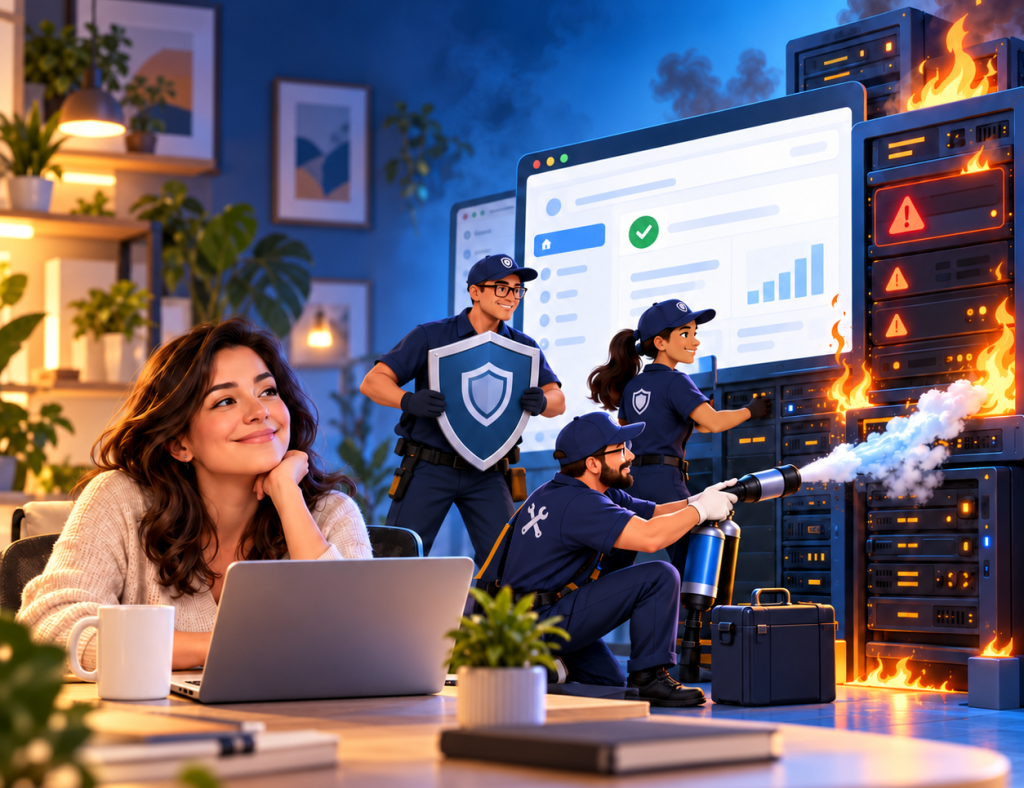
Homeowners should check their smoke detectors, but they shouldn’t have to own a fire truck and 60 pounds of protective gear. Likewise, website owners shouldn’t have to monitor security advisories and manage emergency runtime updates.
Managed hosting proved its value last week. When the alarm sounded, the firefighters had already arrived.
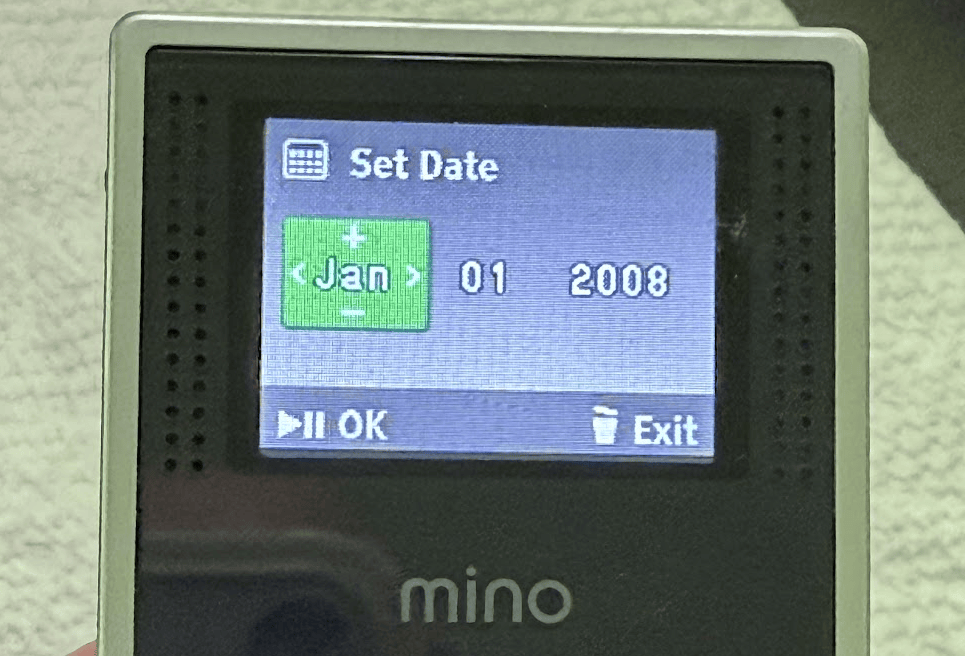
Two weeks ago, I turned on a Flip Mino camera for the first time in 15 years. It asked me to set the date. It defaulted to January 1, 2008. I changed the month and day, but the year setting maxed out at 2020. The Flip team didn’t think anyone would still be using their product in 2026.
So why was I?
Joanna Stern invited me to her first “New Things: New Friends” dinner during SF Tech Week and asked everyone to bring an old piece of technology. Driving into San Francisco, I called my oldest kid to tell them I had taken their car. I explained the dinner and the assignment.
“So you’re just going to walk in yourself without a device? Because you’re old.”
I brought my Flip Mino anyway.
It can’t record anymore. Pressing the record button actually makes it freeze. But playback still works. There were 18 videos on it, and every one was of my two-year-old daughter in a ballet class in 2010.
She’s 18 now and just started college for musical theatre.
The original Flip Video came out in 2007 and this Mino model followed in 2008. It recorded an hour of standard-definition video and had a USB connector that flipped out of the top, hence the name Flip. At the time, it was magic. By 2009, Flip had sold more than two million cameras. Cisco bought the company for $590 million. Two years later, Cisco shut down the entire Flip business.
My kids asked why anyone needed a separate video camera when I already had an iPhone. I explained that in 2008 the iPhone 3G only had a two-megapixel camera with no zoom and it couldn’t record video. The iPhone 3GS and Android added video recording in 2009. Soon the job of a Flip camera was just another feature on your phone. How humbling.
Walking through the Computer History Museum humbles me like that. You move from decade to decade, seeing wartime computers from the ’40s and mainframes from the ’60s and the personal computers that followed. This is technology that changed the world, before fading away, becoming foundations, features, footnotes, and dead ends.
At Joanna’s dinner, we talked about AI agents, human voices, trust, and what happens to the web when machines do all the clicking.
Today’s frontier AI models are astonishing, but they will become old things too. Some will become foundations. Some will disappear. Entire companies will be reduced to a single button on whatever someone invents next year.
My Flip Mino couldn’t imagine a year after 2020. But it held onto 18 videos of a two-year-old ballerina long enough for her to start college for musical theatre.
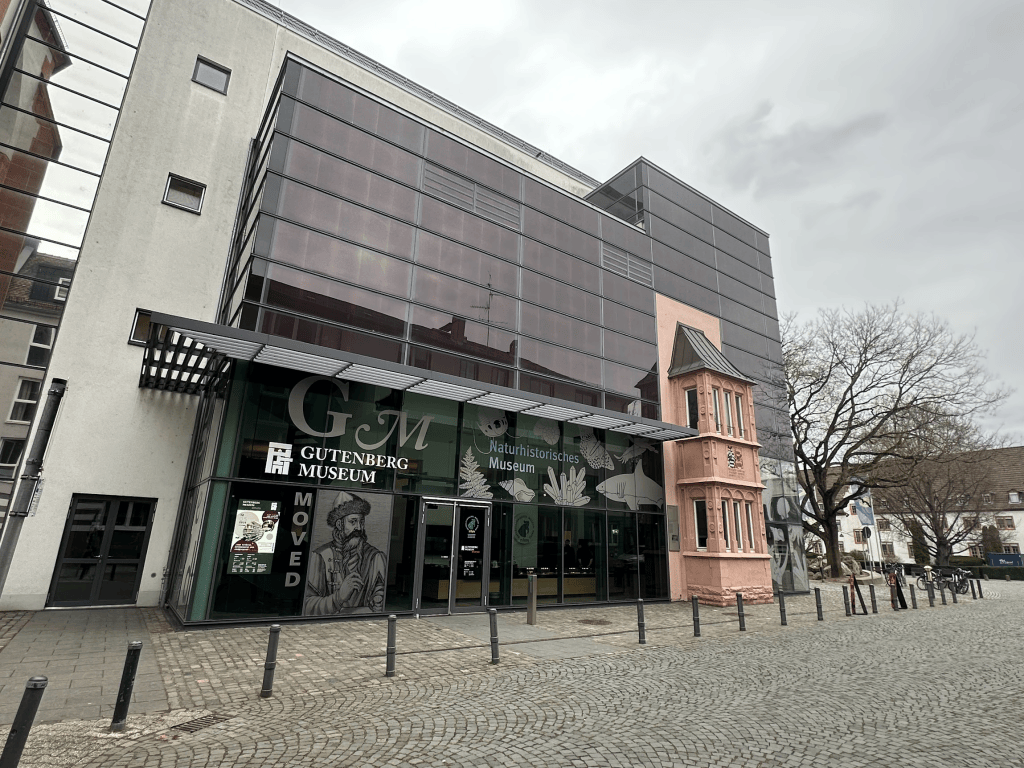
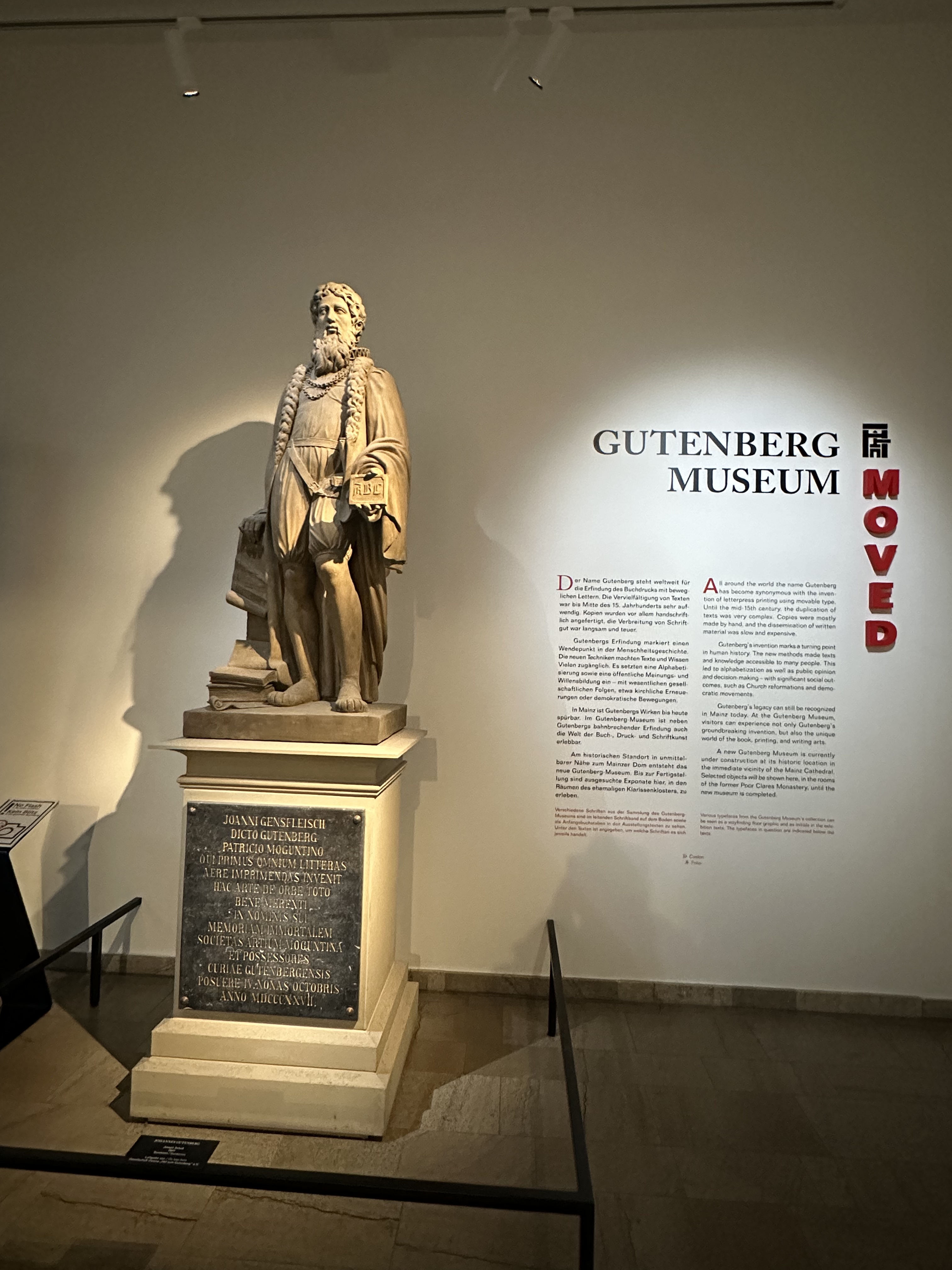
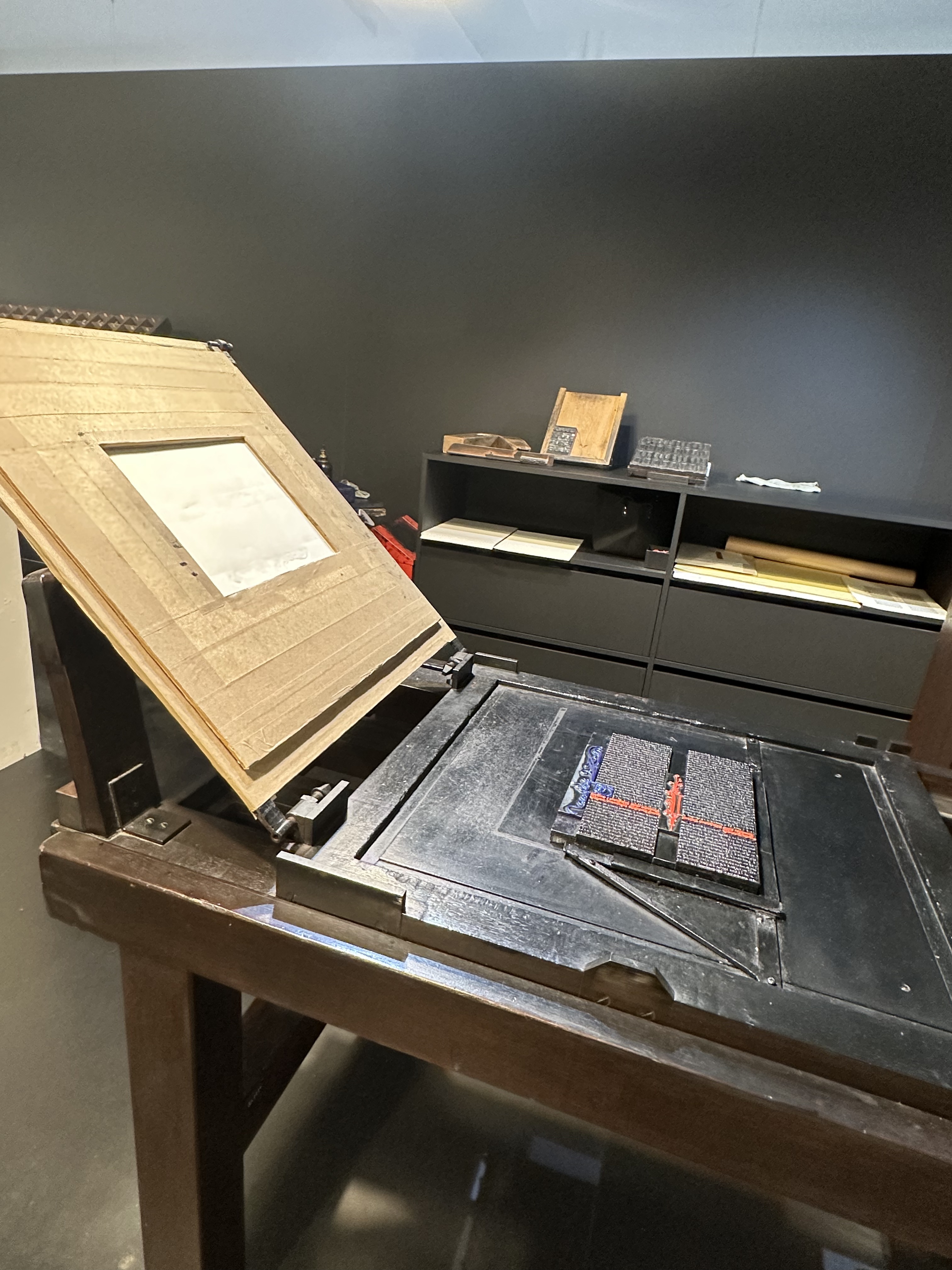
Visiting the Gutenberg Museum in Mainz, Germany was a bucket list experience for me. I’d been at WordPress VIP for four years and the block editor in our CMS is called Gutenberg, so I kept trying to get them to host one of our team meetups close enough for us to visit the museum.
In March, we had a product team meetup in Berlin and a Lufthansa strike meant I might not make my connection home through Frankfurt. So I canceled that first flight and took a train to Frankfurt, leaving at 6am so I could spend a few hours in Mainz.
Why did this mean so much to me? After college, I worked with magazines and four-color CMYK printing. But really, it all started with a tour of Marvel Comics.
My dad wrote Stan Lee a letter asking for a tour of their offices for my 11th birthday. That Friday, instead of going to school, my dad, my sister and I rode the subway into Manhattan and we spent the day on the 6th floor of 575 Madison Avenue meeting artists and writers and editors. It was a surprise, but I clearly remember figuring out what was about to happen because the floor indicator over the elevator door had a picture of Spider-Man’s face on it for the sixth floor. Wow.
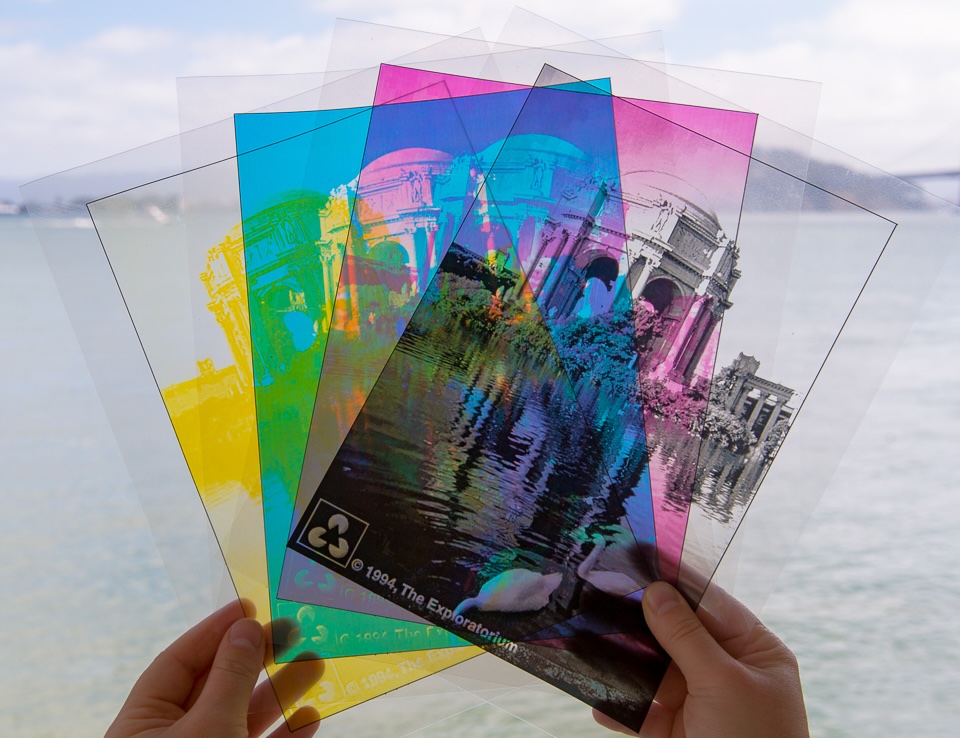
Besides dozens of free comics, two things I got that day that changed my life were John Buscema and Stan Lee’s book “How to Draw Comics the Marvel Way,” which taught me how to draw, and an acetate overlay from an ad for Elric that was drawn by P. Craig Russell. There were four acetate sheets, each with one of the yellow, magenta, cyan and black layers, stapled on top of a white cardboard backing. So you could flip them up and down and see how CMYK brings to life a fully-colored picture. It blew my mind.
A similar CMYK example from the Exploratorium in SF.
After college, I worked in desktop support for magazine companies: running Novell servers, fixing printers, troubleshooting fonts in Quark XPress. Soon, I got to be an art director myself and create magazines with my friend Jason. Other friends of mine like Glenn worked in digital pre-press and their offices had posters like “Whoever Dies With the Most Fonts Wins” and external hard drives full of fonts.
That’s how I got publishing in my blood, all before the web happened and CMYK gave way to RGB.
Around the time of my museum trip, Matt recommended a book by Matthew Butterick called Practical Typography. One of the great things about Automattic is that when they recommend a book, everyone in the company can buy it and expense it. We support creators and publishers in so many ways.
Butterick’s book is fantastic and claims to explain typography in ten minutes, which is bold. Even more bold was his claim that he can do it twice:
All it takes is ten minutes: five minutes to read these rules once. Then five minutes to read them again.
So March was a magical month for me, and had me thinking a lot about publishing history from NYC in the ‘90s all the way back to the 1400s.
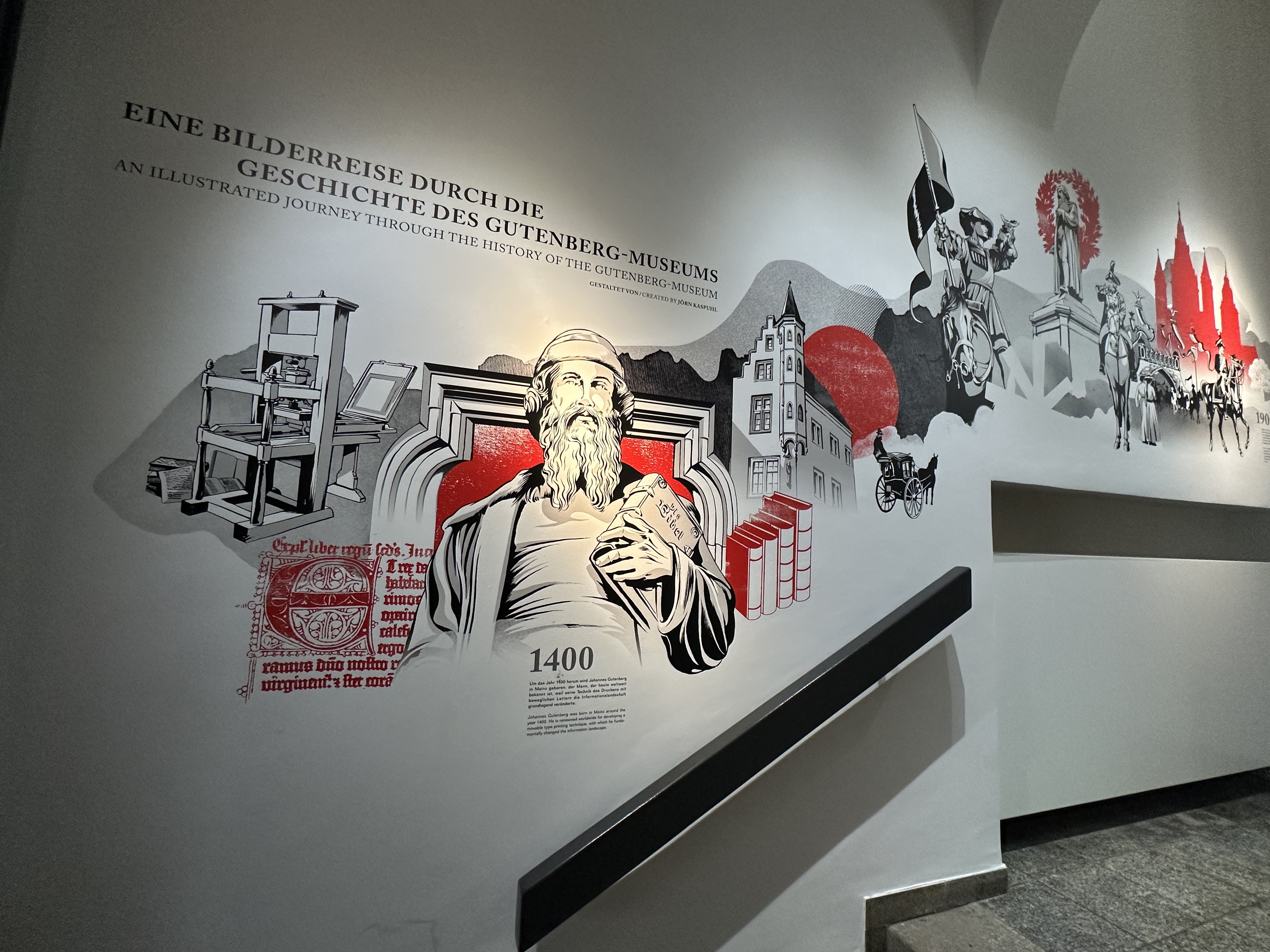
And here I was, finally at the Gutenberg Museum.
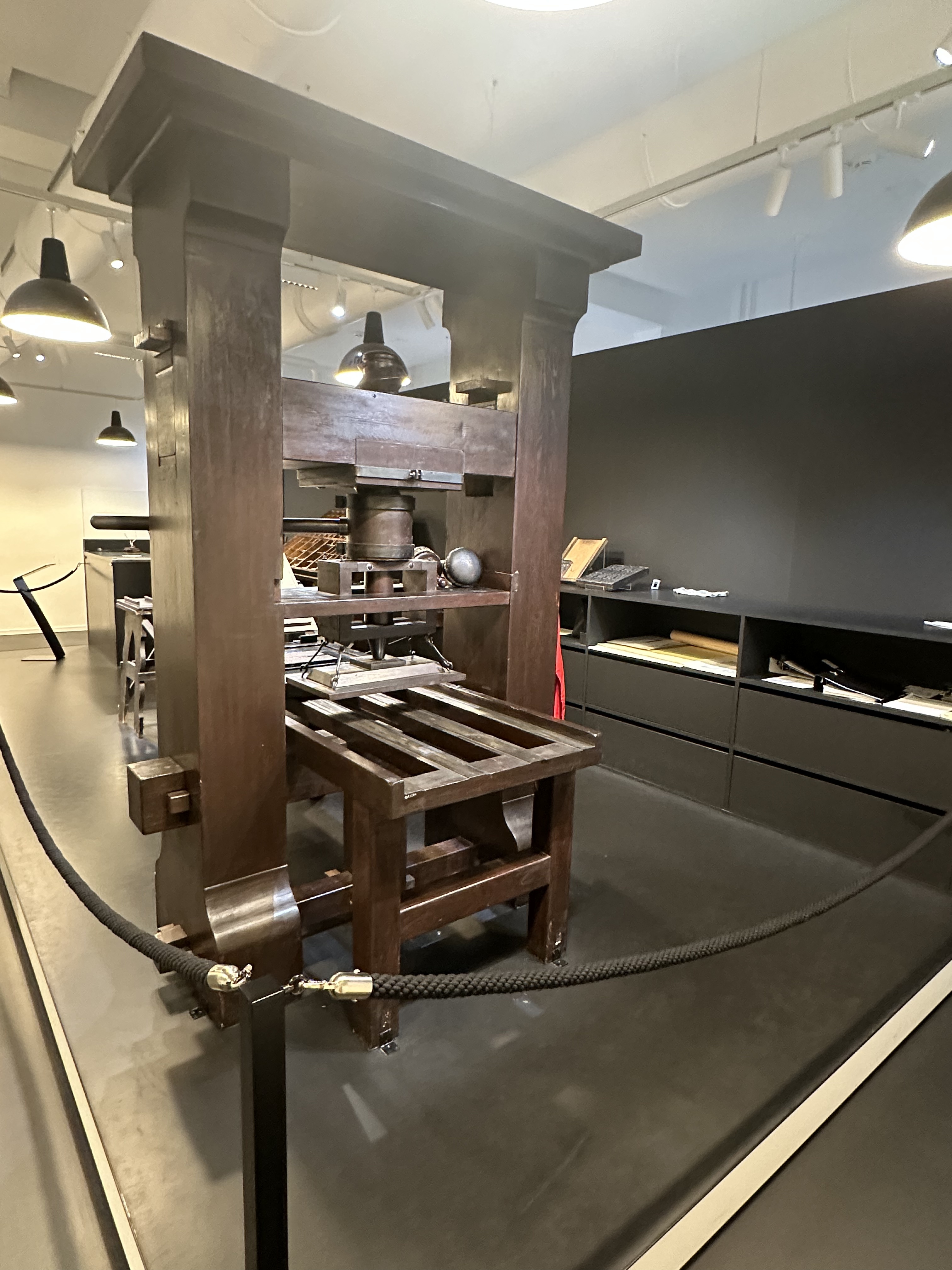
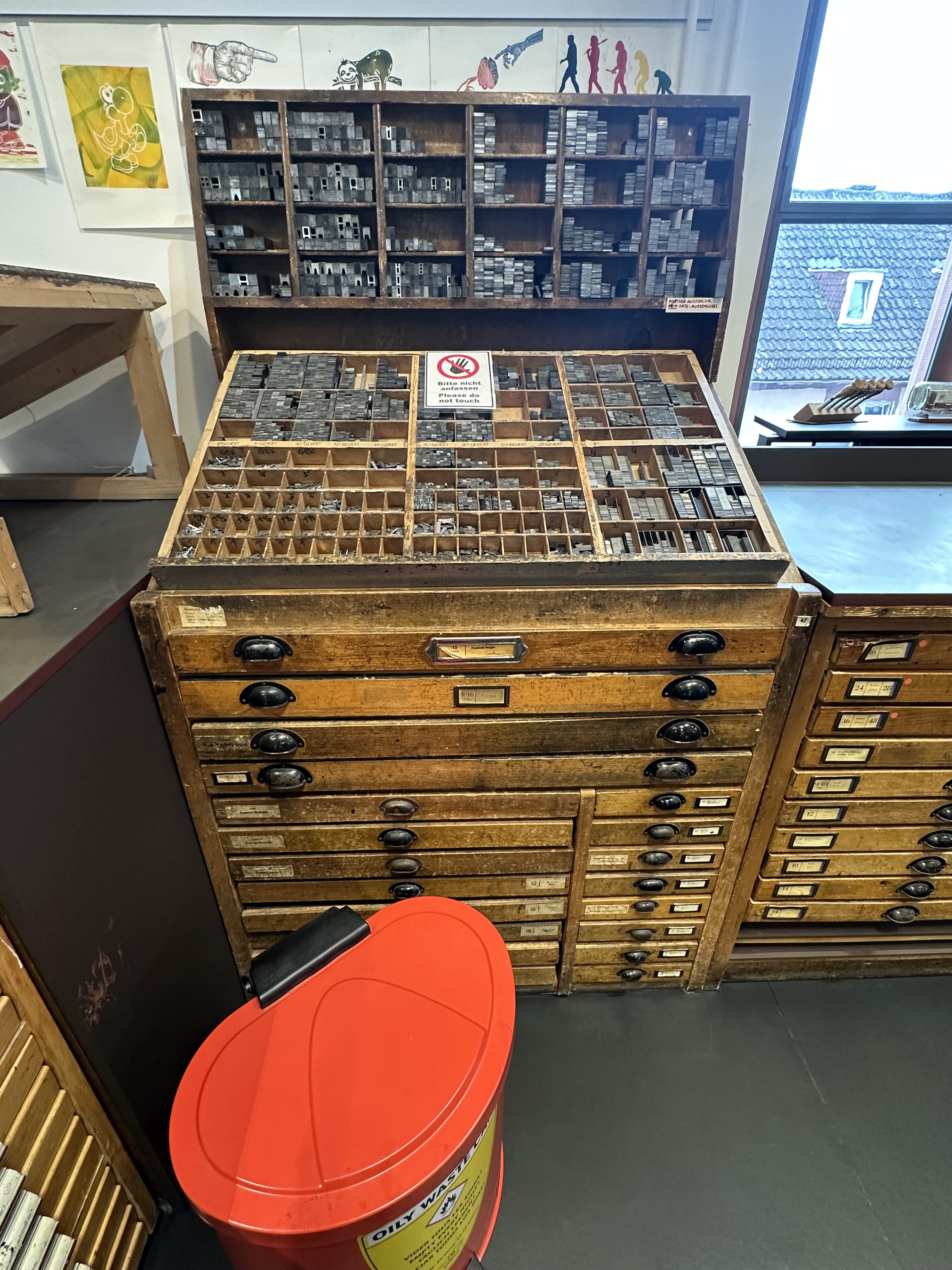
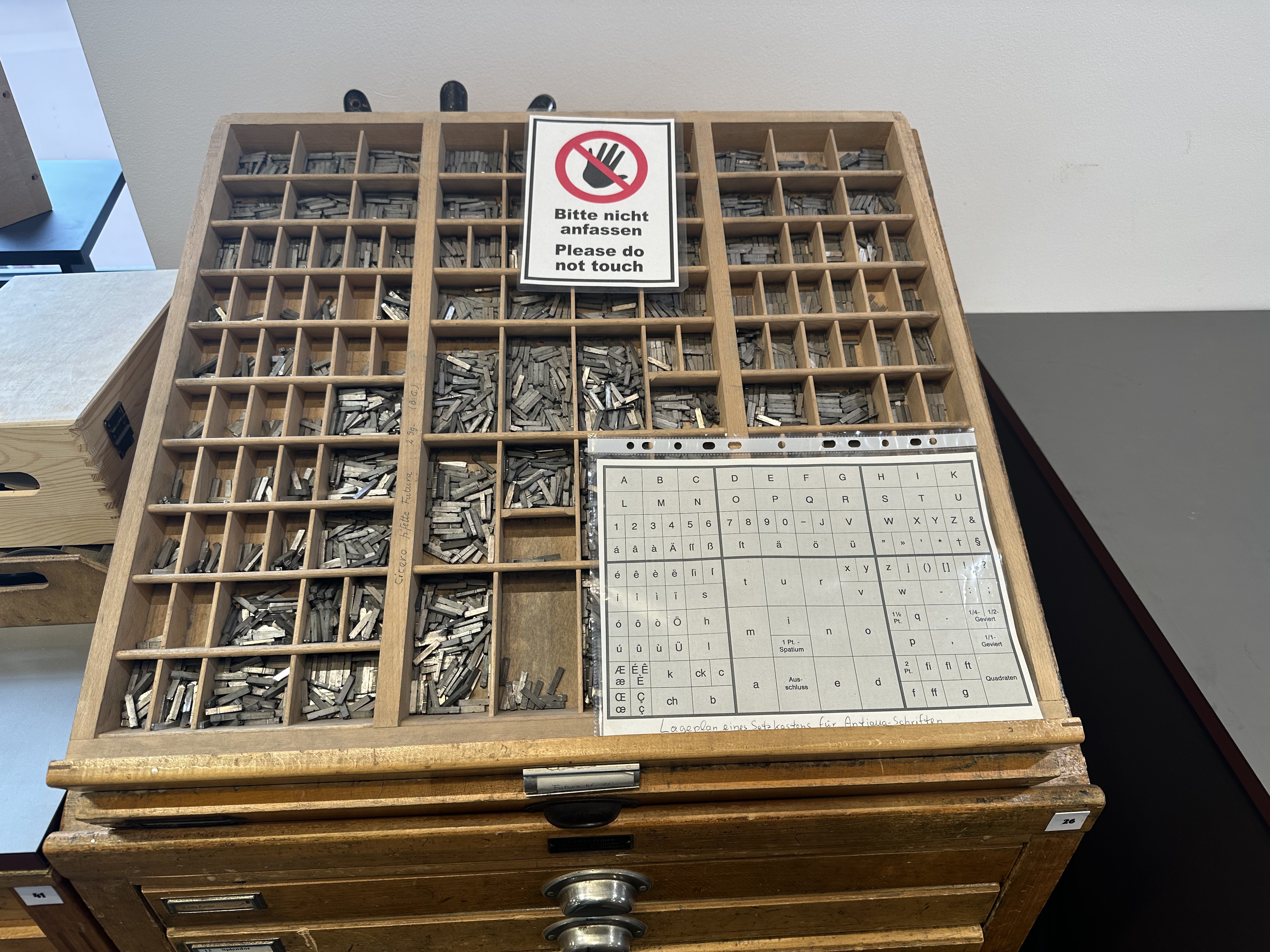
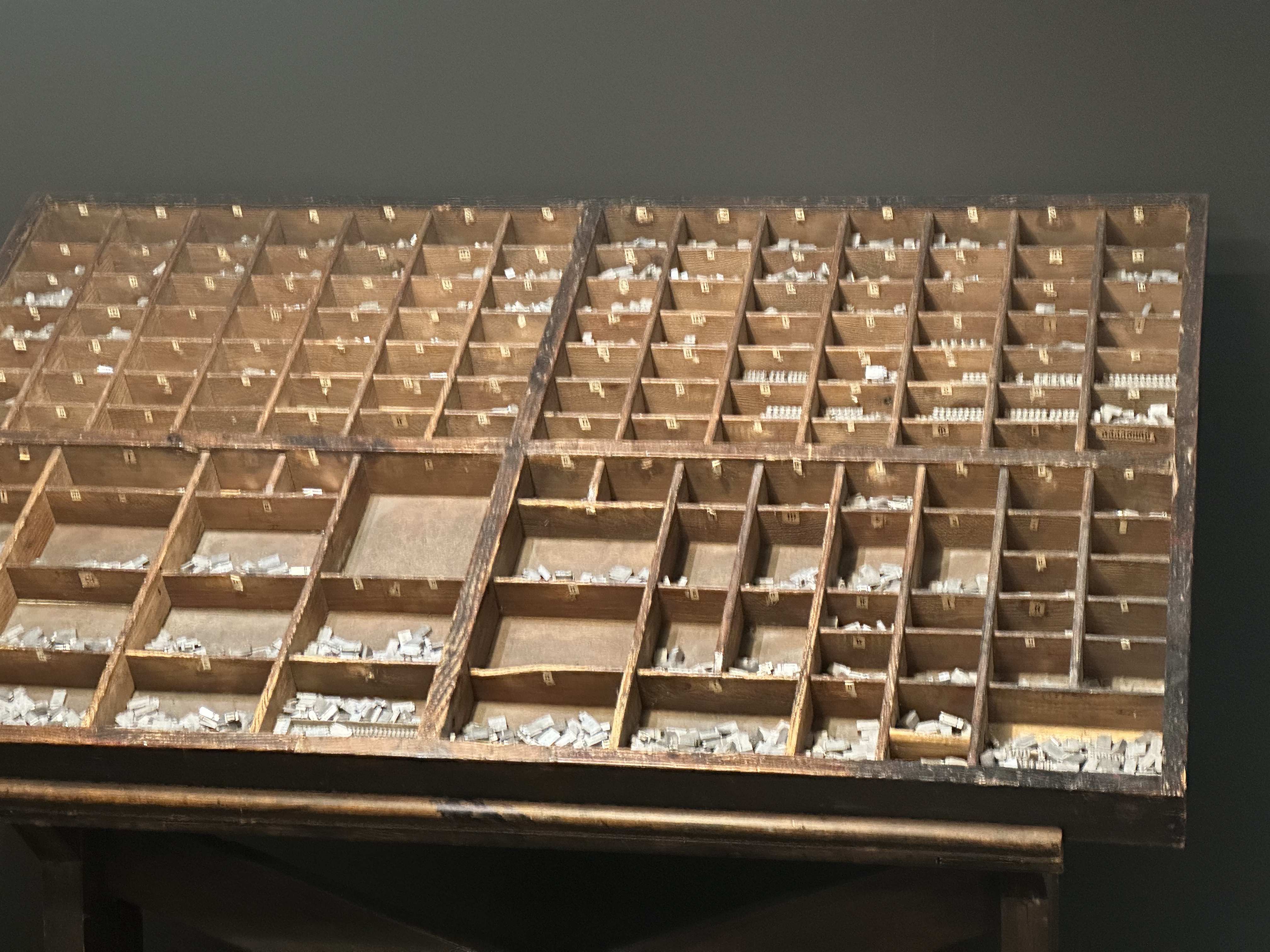
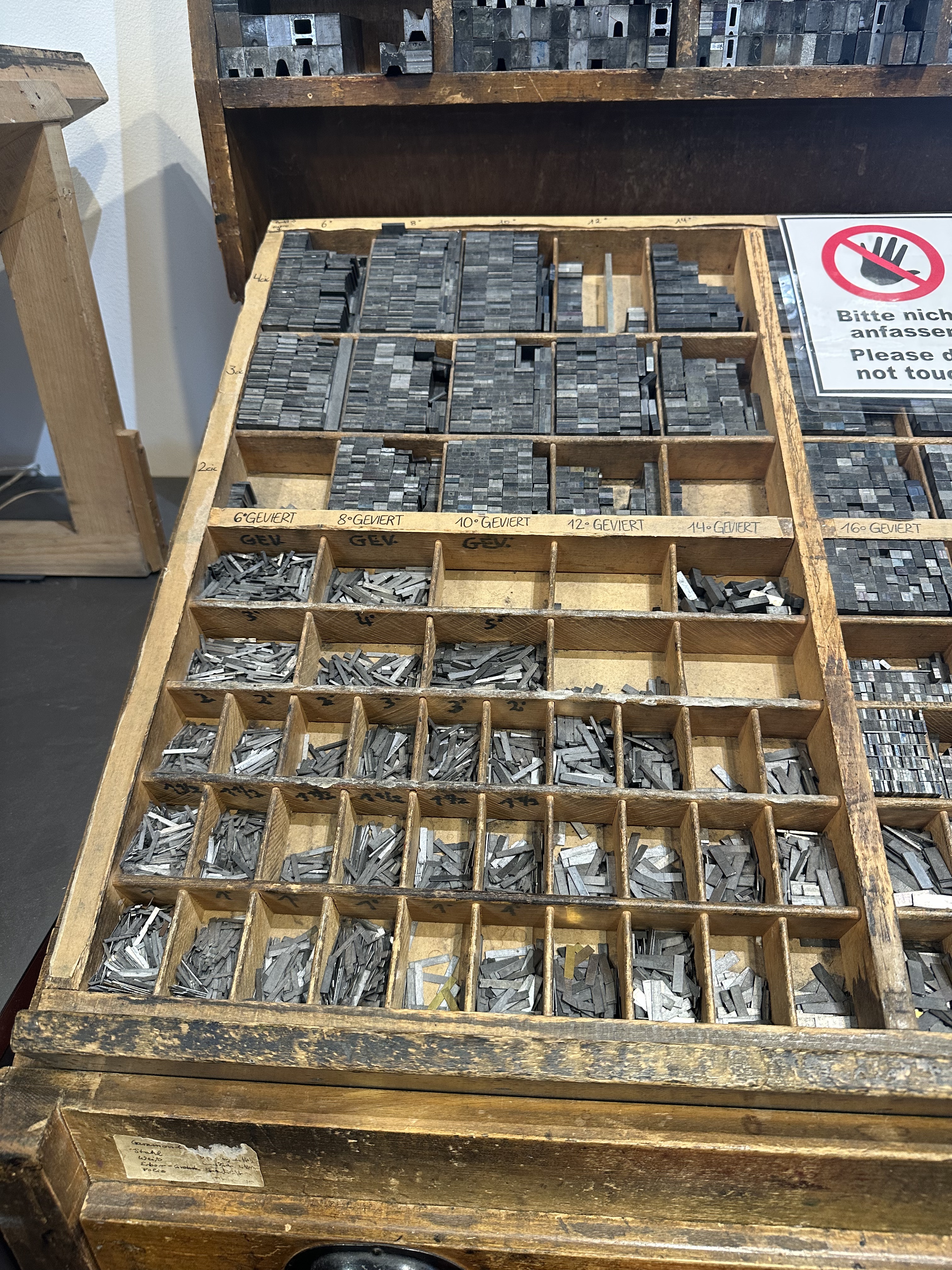
Around 1450, Johannes Gutenberg created the first printing press. It used small interchangeable cast metal letters to transfer each line of text onto a page. Much of the typography terminology we still use today is from the Gutenberg days: leading, logotype, ligatures, upper case and lower case.
Before Gutenberg, scribes copied books by hand on scrolls and paper, or print-makers printed texts from hand-carved wooden blocks. Either process took a long time; even a small book could take months to complete. Because carved letters or blocks were flimsy and the wood susceptible to ink, the blocks had a limited lifespan. — Wikipedia
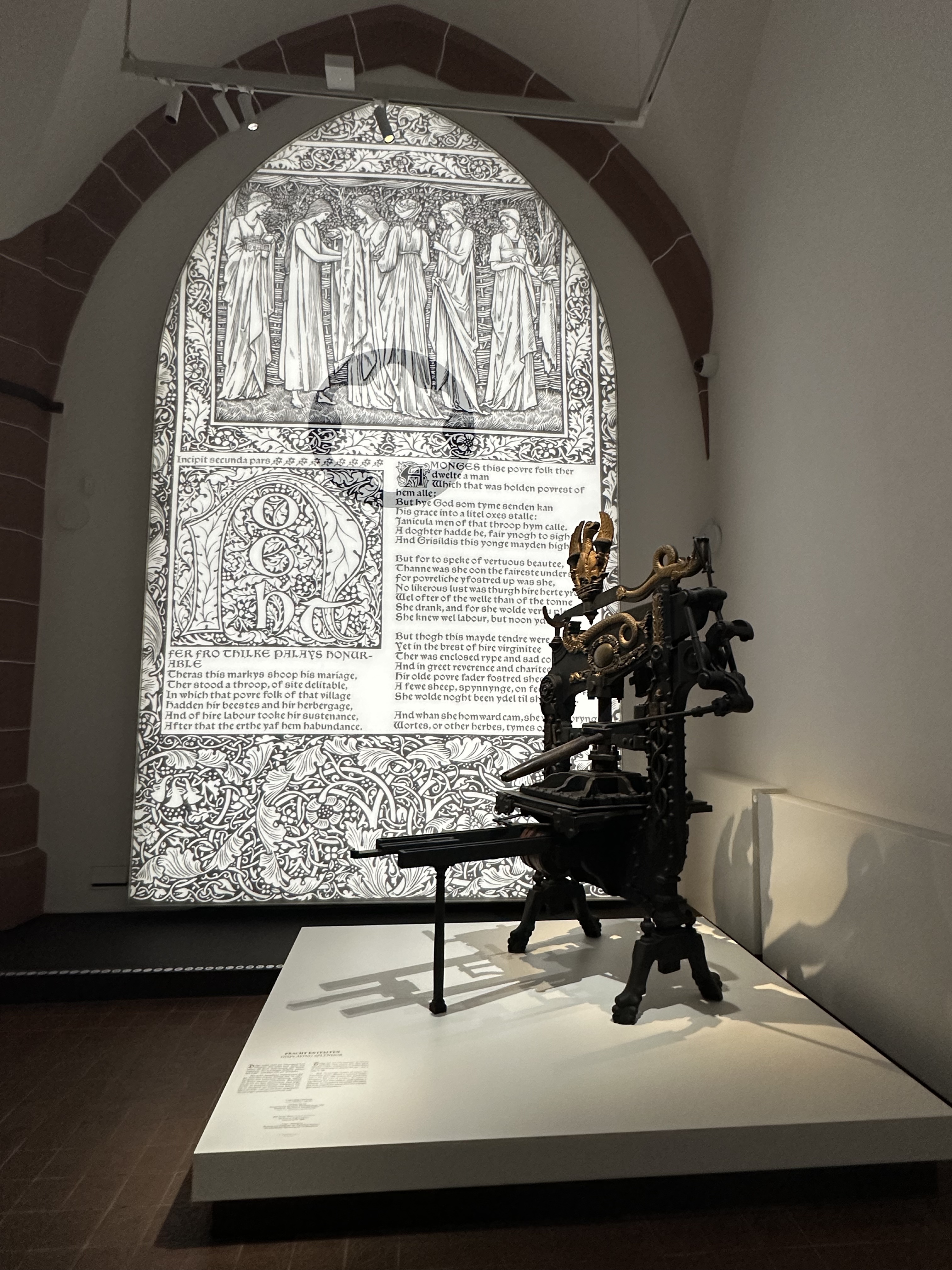
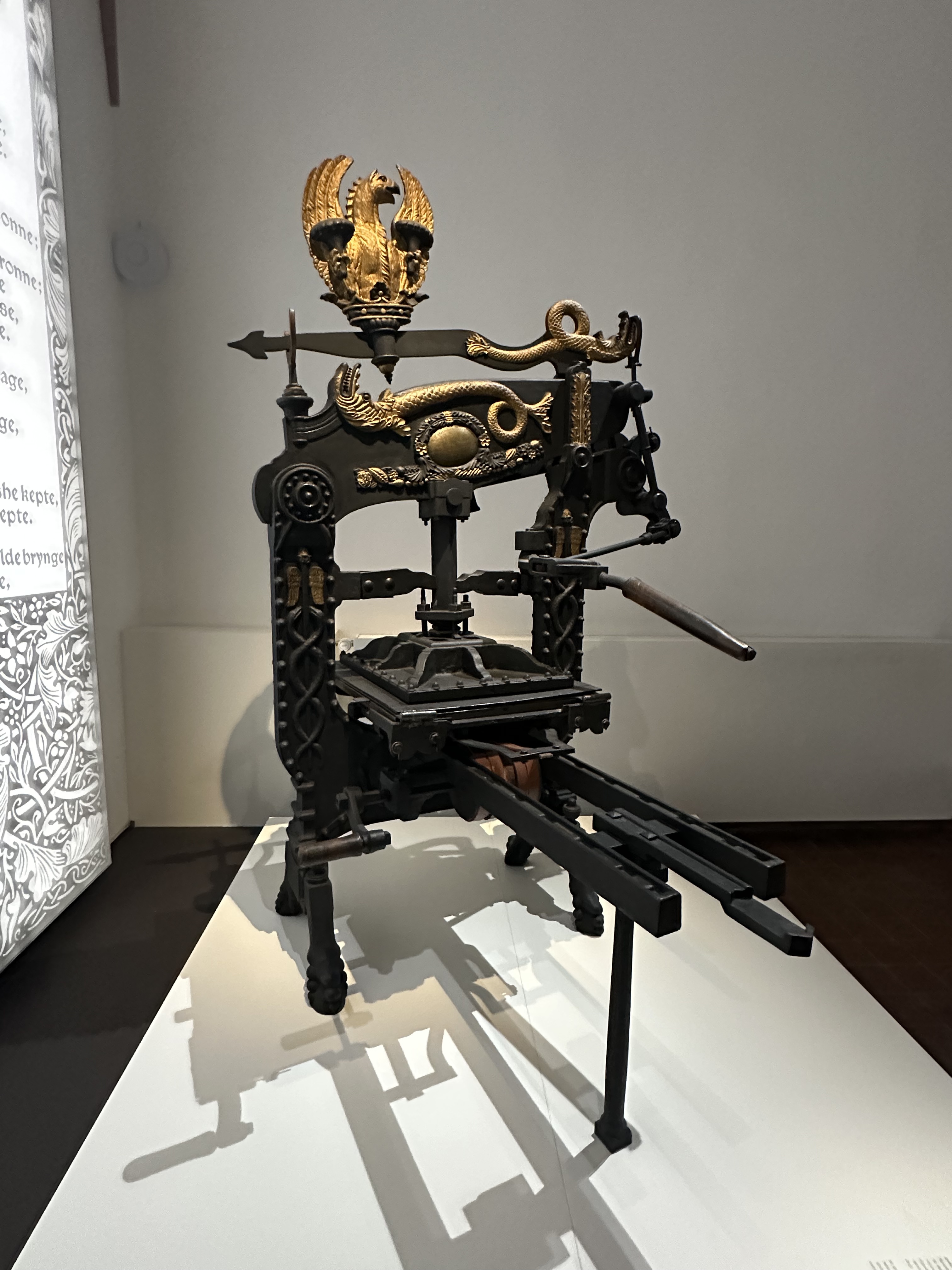
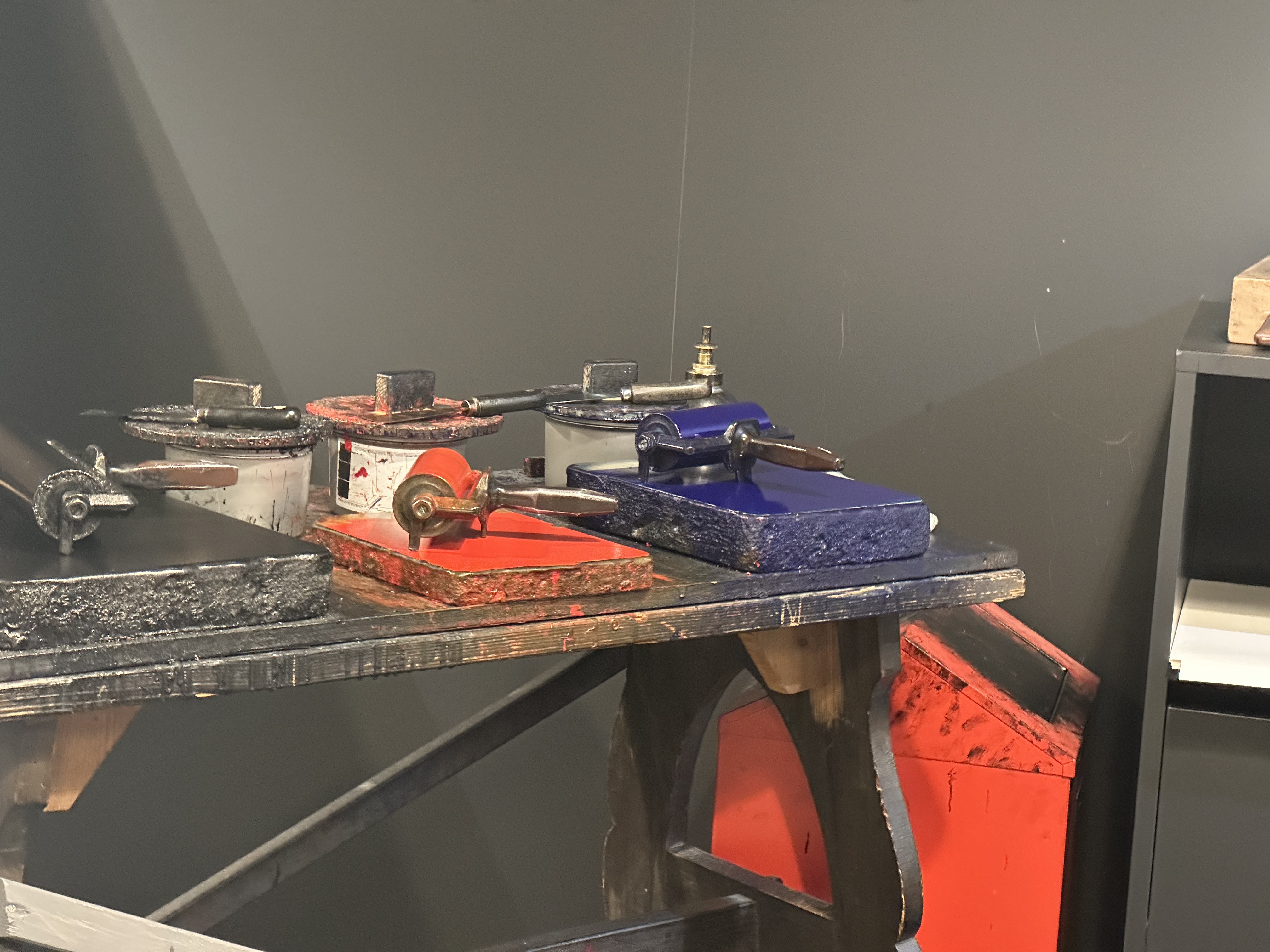
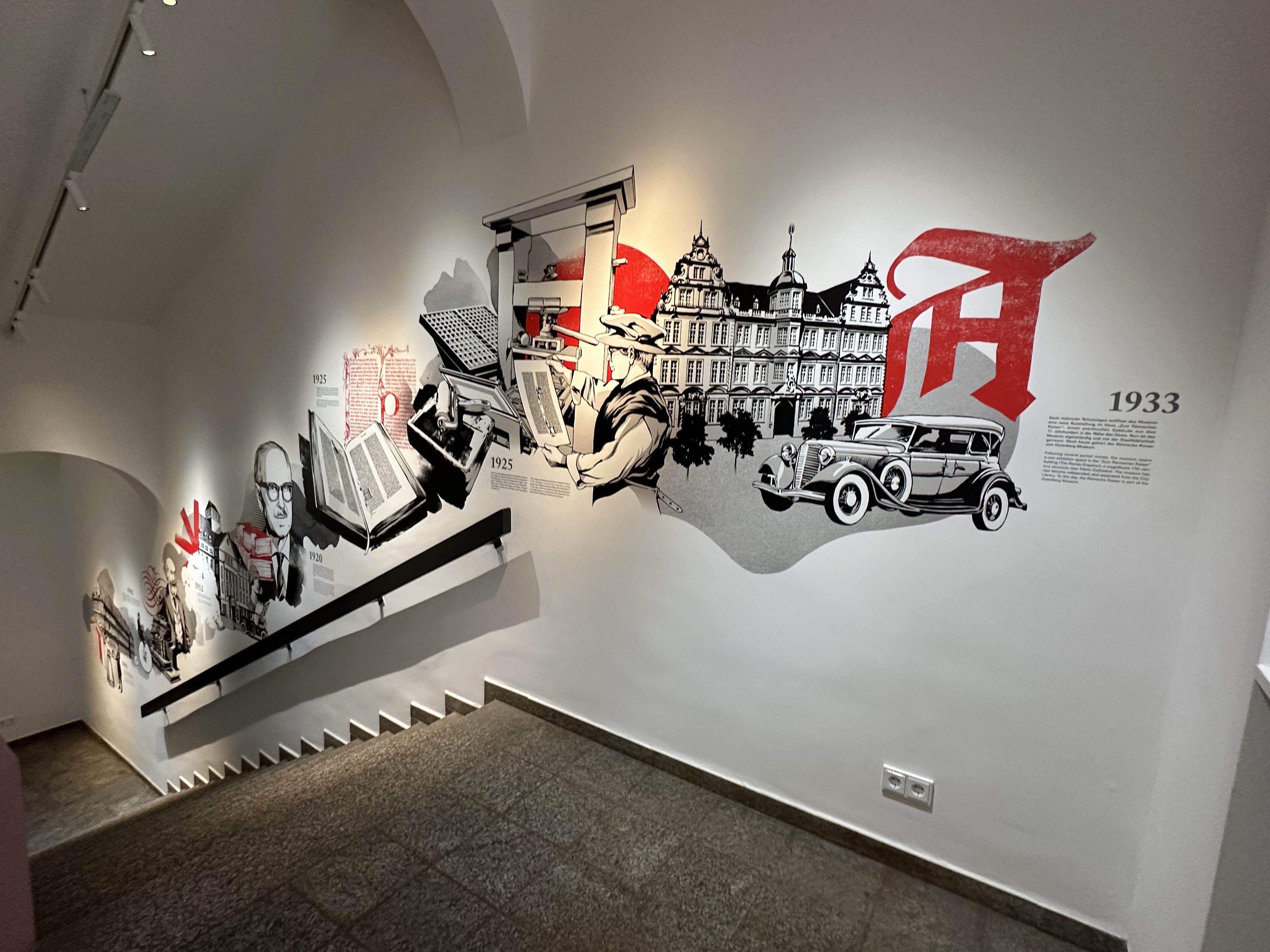
None of the devices there were from the 1400s. The original presses weren’t built to last for centuries, and maybe no one at the time knew how important they were. But a few of the original run of Gutenberg bibles do remain and they were on display in Mainz.
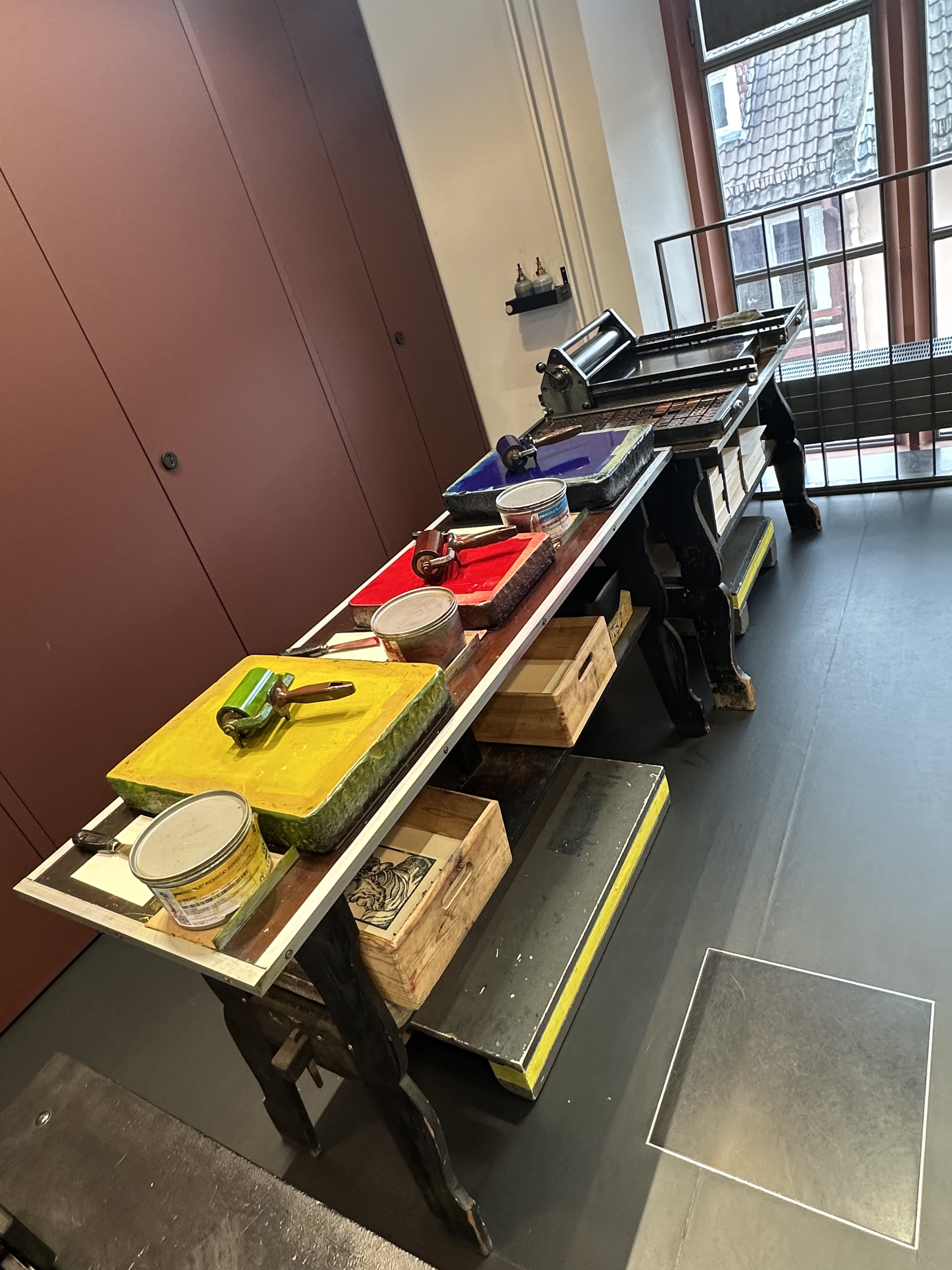
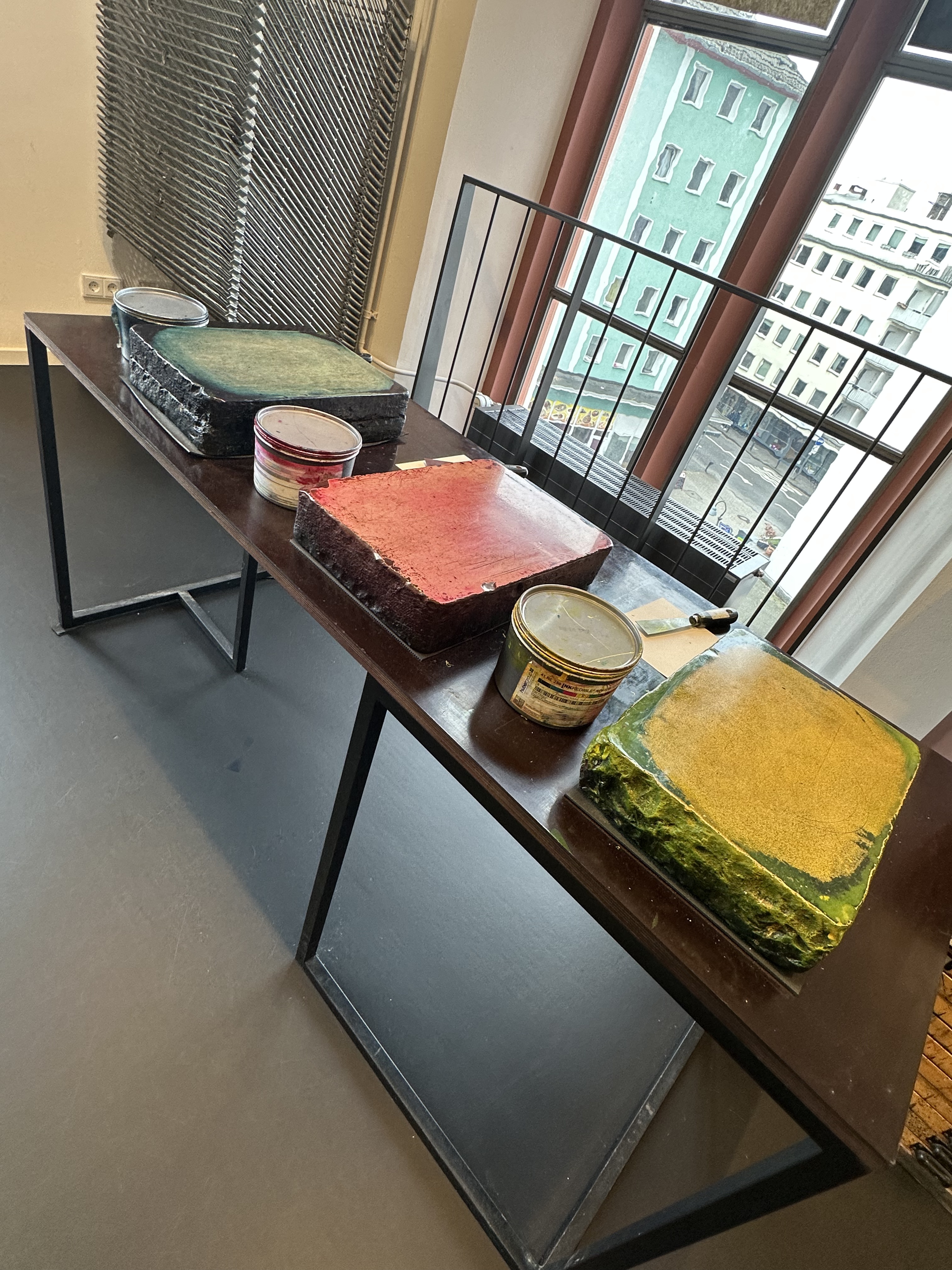
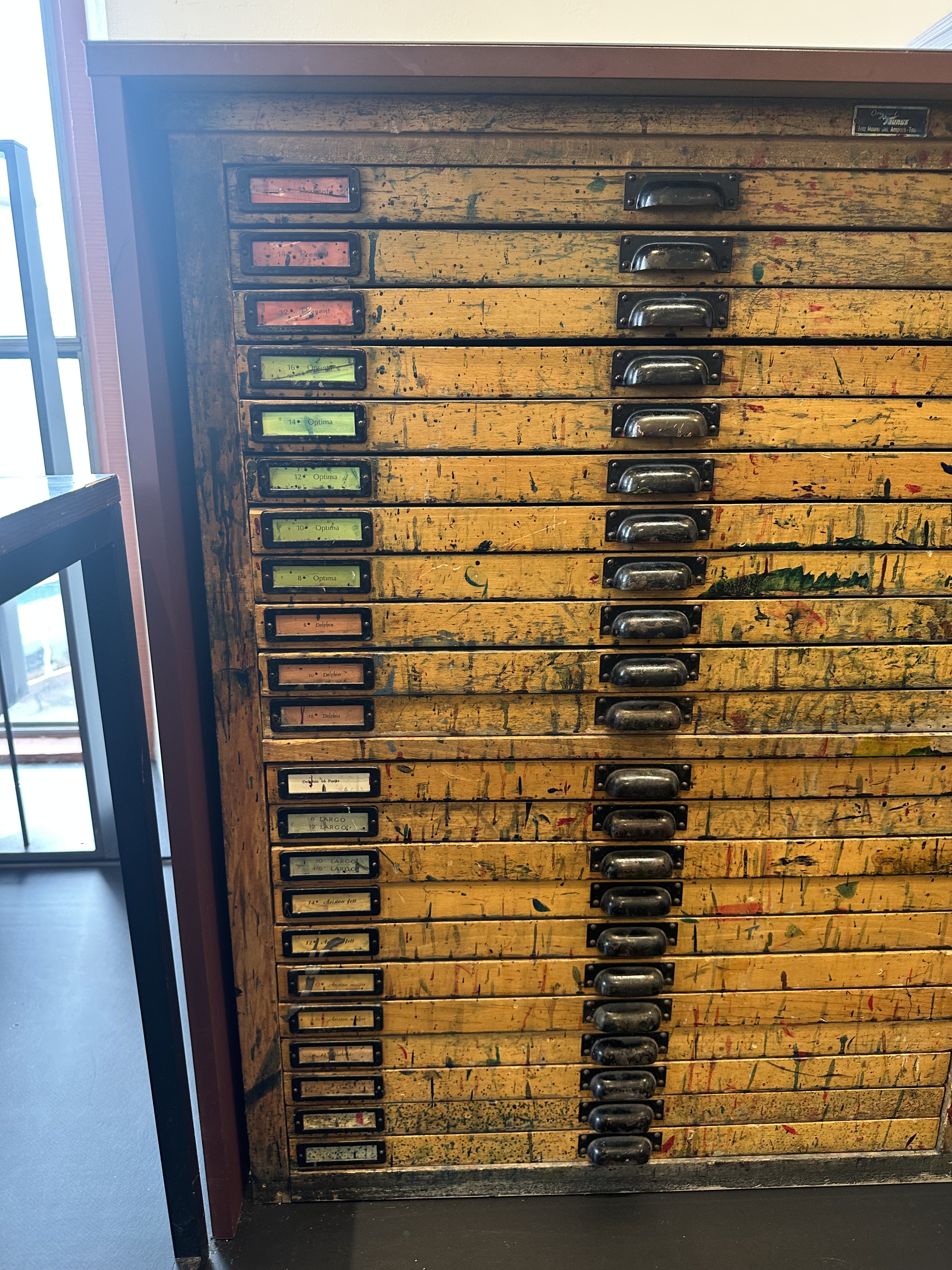
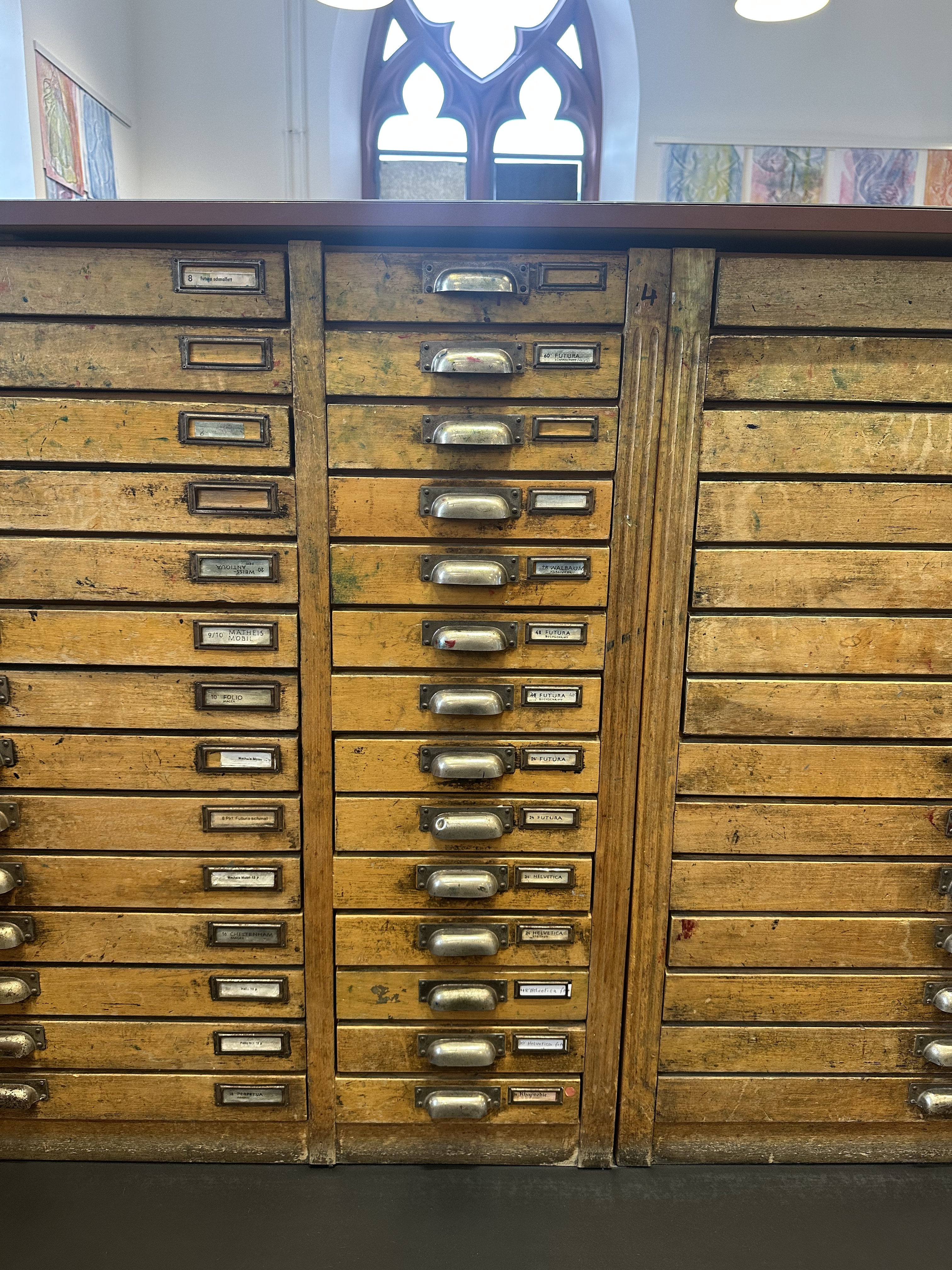
Upstairs, the museum had a room where you could do hands on work with inks and metal type. I had to make it to my flight, so I walked around and took some pictures.
That was an amazing day.
You’d think typography doesn’t matter now that everyone flicks through websites and apps on their phones, but it does. In the book Practical Typography, Butterick points out how important highway sign font choices are. Highway Gothic, the 1940s font choice for U.S. highway signs, was carefully designed to fit different text lengths and for fast legibility at high speeds, but that was replaced by Clearview in the 1990s to improve legibility at night when bright retroreflective headlights cause letters to blur together. Type saves lives!
When we built the collaborative design platform Ceros in 2012, our engineer Rus converted fonts into JavaScript glyph functions that could render 20,000 characters as they were dragged across a multiuser canvas at 30 frames per second.
When I was in Mainz, one of the most talked about web technology breakthroughs was a TypeScript text layout engine called Pretext that was 300-600 times faster at measuring and laying out multiline text in a browser, including wrapping text flow around objects as you drag them.
And one of the global media companies we’re working with at VIP asked me to help make WordPress the core of their print workflows in addition to their digital publishing. I cannot wait to see what WordPress and modern AI can do for newspapers.
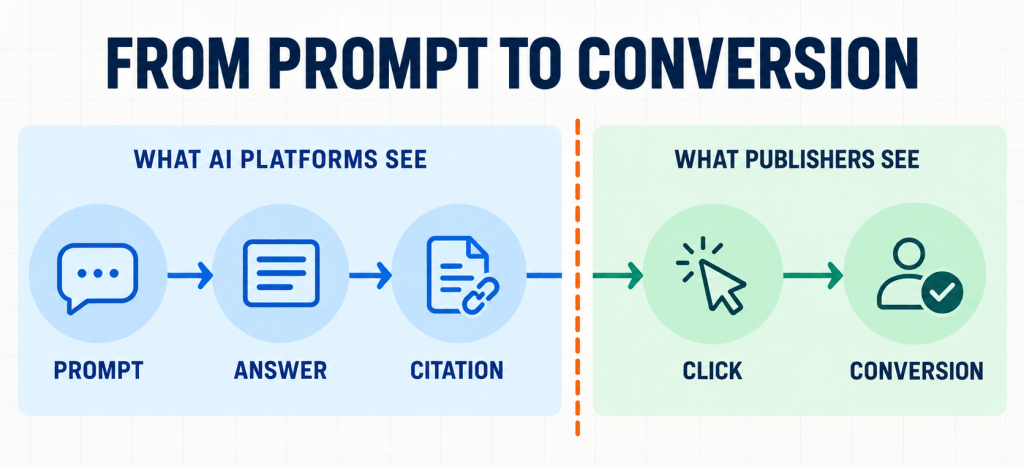
They can’t see the answers it builds without them.
The next big breakthrough for publishers won’t be another AI model. It will be a Search Console for AI.
Comscore’s new AI Intelligence Report shows how quickly discovery is fragmenting. Between January and June, ChatGPT’s share of AI prompt volume fell from 70% to 50% while Gemini and Claude gained.
Optimizing for a single model is already a losing strategy. Yet publishers still can’t see what happens between someone’s prompt and an AI-generated answer.
Measurement is the blind spot. A publisher’s website and CMS provide a durable foundation for AI discoverability, but your site analytics show only the people who click. They don’t show the prompts, impressions, mentions, and citations that don’t get clicked.
Google has begun closing that gap. Its new generative AI report in Search Console shows impressions from AI Overviews and AI Mode. But it still doesn’t show clicks, click-through rates, the queries that triggered an appearance, or where your citation appeared within an answer.
Publishers need that information.
Will one great AI console solve the problem?
No.
The fragmented AI market means publishers will eventually need a unified view across all of the major services. But that view can only be built after each platform exposes the first-party data only it can see.
So keep making your content authoritative, structured, and original. That isn’t just practice. It’s the engine you need.
But today, publishers are still tuning it by ear.
The first AI platform to offer a full dashboard won’t solve cross-platform measurement. But it will set the standard and earn publishers’ trust.
I tried to look at this as a positive sign. A milestone. I spend so much time talking about using AI at a high level, but I rarely have time to code and I always feel I’m stuck in first gear. Like an imposter. So it was a kind of accomplishment.
But seriously, what was I going to do for those 10 days?
Catch up on podcasts?
Take long walks?
Learn a new language?
Retire?
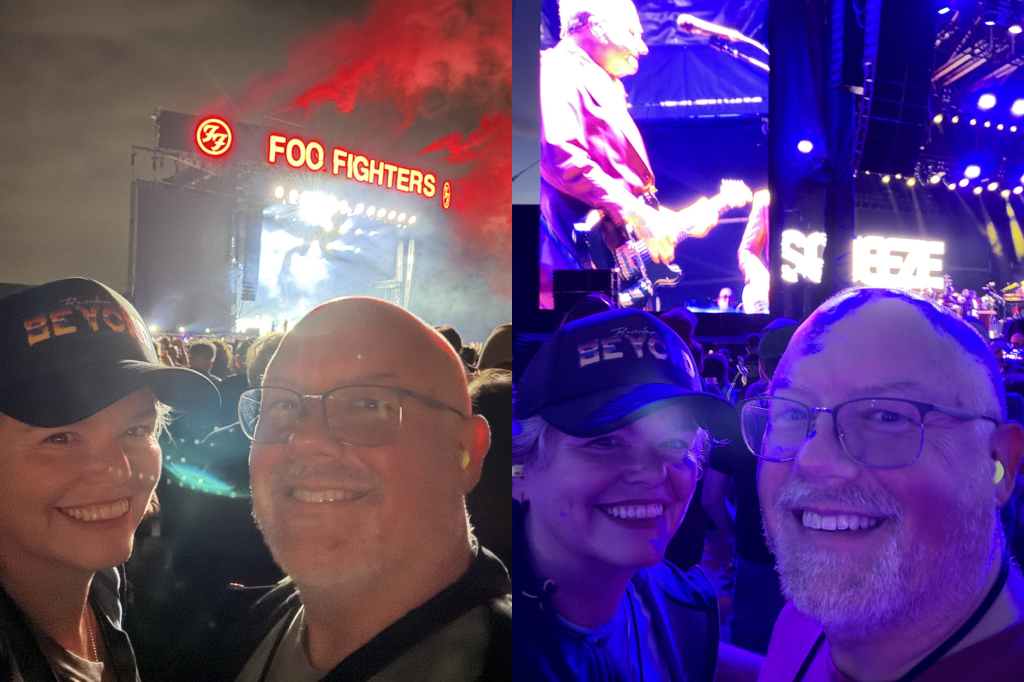
Fortunately, we had a four-day weekend trip planned to go to the Bourbon & Beyond music festival. It was my first visit to Kentucky and we had a blast, along with more than 200,000 other people. For an event of this magnitude, it was unbelievably well-run. Nice work Danny Wimmer Presents.
Search engines have always worked like a mall directory. They showed you where all seven sneaker stores were and how to get there.
Today’s answer engines are more like genies. You need sneakers? They just hand you the sneakers. No listings. No browsing. No shopping. No visits. No clicks.
This is worse news for publishers than it is for marketers and commerce sites. If you’re a car company or pest-control service, the answer agent shortcuts the shopping process, but they still send you a customer who’s ready to buy.
But if you’re a publisher? Your content is the product. How do you make money when the answer engine shortcuts the whole reading journey?
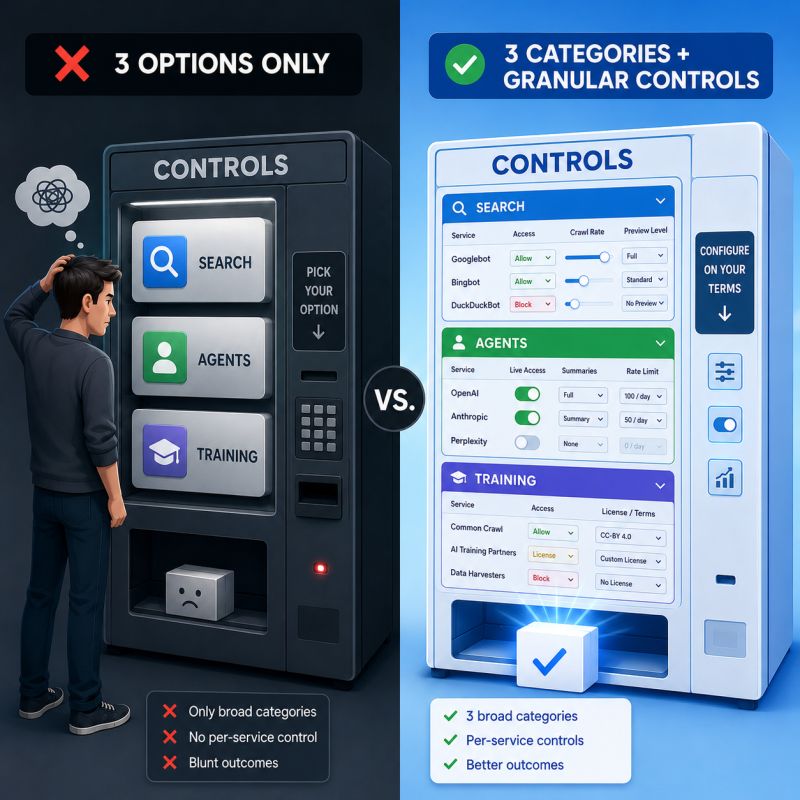
Cloudflare just segmented AI traffic into three types: Search, Agents, and Training, and they’re letting their customers turn access on or off for each type. That’s better than a single on/off switch for bots, but for a high-end website that isn’t enough control.
The real control businesses need is for each service within those categories. They need to decide which crawler gets which content, for what purpose, and under what terms.
This isn’t hypothetical. One of WordPress VIP’s enterprise customers might want to allow every bot to access their site except Perplexity, because they’re negotiating a deal with them. Another maybe has a deal with Perplexity and loves them, but needs to block OpenAI. And many customers just want all bots redirected to TollBit to collect micropayments for accessing their content.
Giving three on/off switches isn’t enough. Enterprise customers need fine-grained controls, down to the individual service.
I did 3 hours of back-to-back Zoom calls from my local Starbucks this morning. There were a few moments where I felt like I was making people suffer through some background noise to indulge me and my caffeine addiction, but it could have been crazier, right?
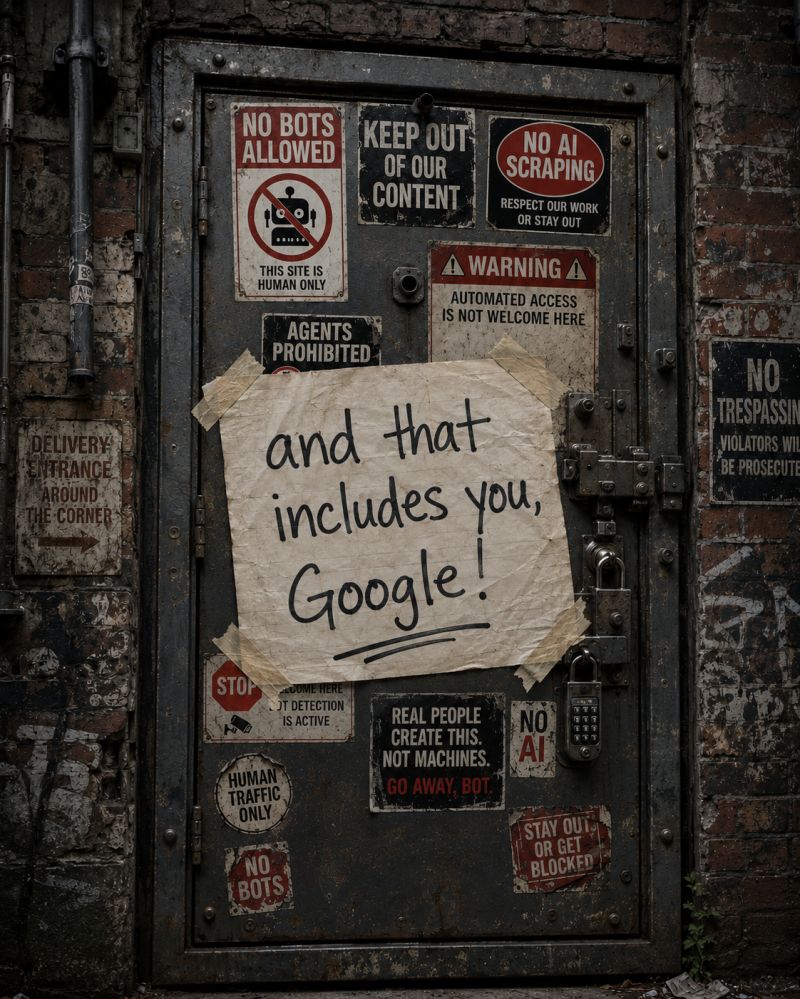
For decades, ranking on Google was survival. Now ADWEEK reports that some of the biggest media businesses are not-so-quietly making plans to disappear from it.
This isn’t just one angry newspaper. The Wall Street Journal lists USA Today, Reuters, Politico, The Economist and People Inc. among the publishers who are considering cutting off Google. And Cloudflare, which sits in front of a fifth of the web, is flipping its defaults to block the crawlers that scrape for both search and AI training.
What changed?
Publishers have always known this dependence was a risk. This is not a revelation. What changed is that the relationship has stopped being a two-way exchange. It’s lopsided.
Neil Vogel, CEO of People Inc., calls Google an “intentional bad actor” for using the same crawler for both search and AI, but he admits People still can’t block it without losing the search traffic it depends on. People Inc is “probably heading towards more confrontation than productivity.”
(I’ve watched Vogel speak a few times recently and he inspires confidence. He seems to have a firm grasp of the industry and an actual plan.)
This Google trap is why the open web matters. It isn’t because of nostalgia or a blind love of all things open source. It’s because ownership and portability increases resilience.
Traffic comes and goes. Ownership compounds.
But the sharp media newsletter A Media Operator makes the case that “No One is Going to Block Google” and the math backs them up. When a publisher still gets over 40% of its traffic from search, walking away from Google is a top-line bloodbath. Google’s Liz Reid reinforces the symbiotic relationship: “Search is not a useful product if the web is not a thriving product.” And Future’s Mike Peralta asserts: “[AI is] nothing but a hallucination without our content.” The industry is also too fragmented for everyone to leave Google all at once, and that’s the only version where blocking actually moves Google.
So will publishers push the big red button? I doubt it, and it doesn’t really matter if a few of them do.
The preparation is the actual prize here. Building newsletters, direct audience, licensing revenue, and owned infrastructure makes you stronger whether you ever block a single crawler or not. Silicon Valley has a word for this: antifragile, systems that get stronger under stress.The exercise of getting ready to survive without Google is exactly what makes you the kind of business that never has to.
The goal isn’t to leave Google.
The goal is to build a business that could if it has to, and no longer has to care whether it does.
AI isn’t replacing websites. But it IS changing what they’re used for.
For years, websites have been the destination.
Today, they’re your system of record that powers AI interactions everywhere else.
I got to join Lauren Goerz on The Dialogue Architects Podcast to explore all the ways that AI is reshaping enterprise content management, digital experiences and the future of work.
We covered enterprise websites as the source of truth in an AI-first world, how answer engines are changing content discovery and totally disrupting traditional customer buying journeys, and why governance and accessibility matter even more as adoption grows. We also talked about jobs to be done (JTBD) as a better way to divide work between people and agents, and what conversational interfaces could mean for enterprise software.
Thanks Lauren for a fun, wide-ranging conversation. You do great research and run a fantastic show.